
Prices kept rising, albeit slightly slower, in early fall. Here are five things we learned from U.S. economic data released during the week ending October 24. (Note that the federal government shutdown has delayed the release of some economic data.)

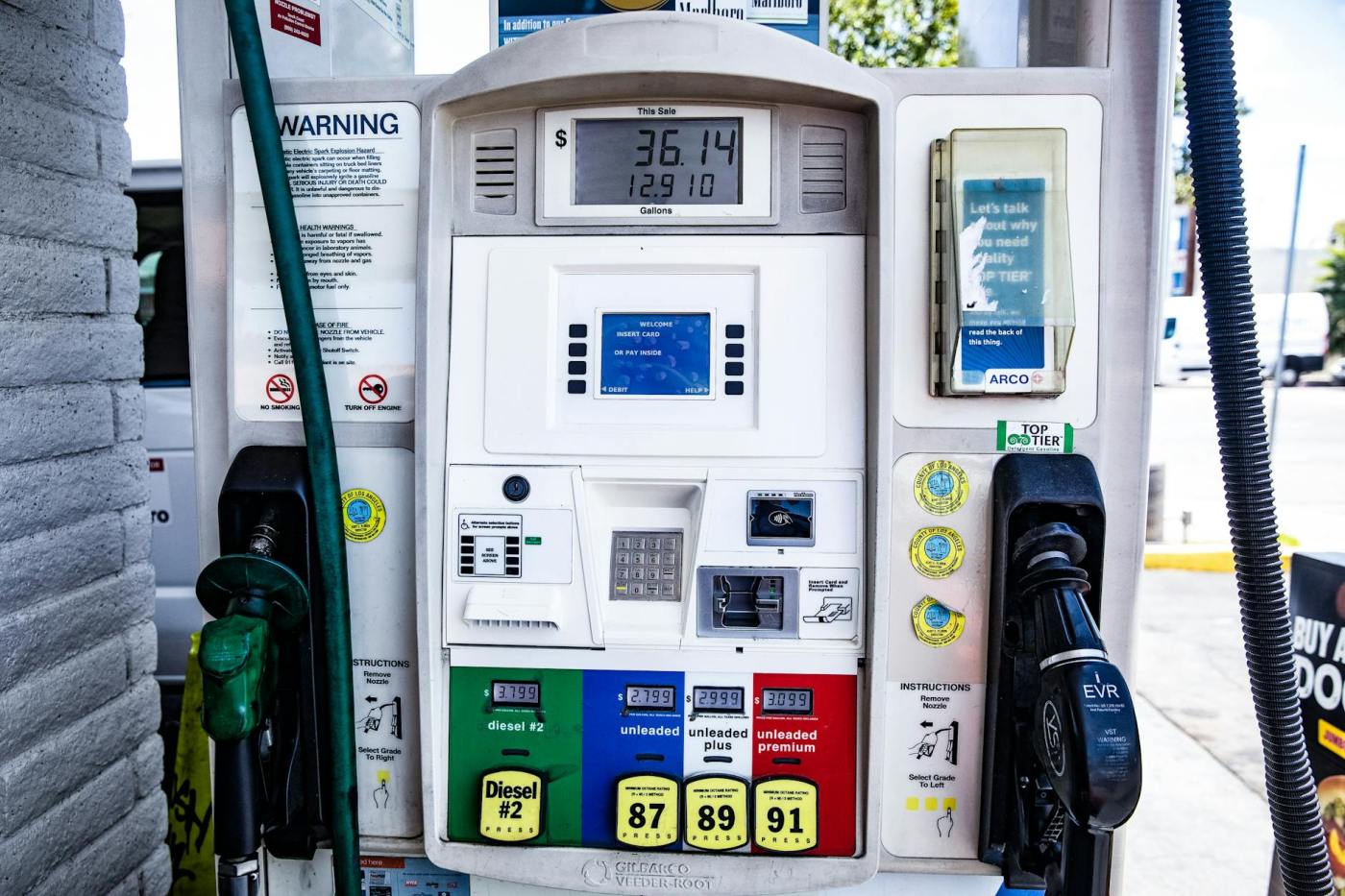
Consumer inflation remained above target in September. The Consumer Price Index (CPI) rose by a seasonally adjusted 0.3 percent, slightly lower than August’s 0.4 percent bump. The Bureau of Labor Statistics measure has climbed 3.0 percent over the past year, marking its largest year-over-year rise since January. Food prices increased by 0.2 percent (August 2025: +0.5 percent), while those for energy zoomed up 1.5 percent (August 2025: +0.7 percent; gasoline: +4.1 percent). Excluding food and energy, core CPI increased 0.2 percent, down from July’s and August’s 0.3 percent gains. Over the past year, core inflation stood at +3.0 percent. Prices rose for apparel (+0.7 percent), transportation services (+0.3 percent), medical care services (+0.3 percent), new vehicles (+0.2 percent), and shelter (+0.2 percent). Prices fell for used cars/trucks (-0.4 percent) and medical care commodities (-0.1 percent). (The BLS released the CPI report, despite the federal government shutdown, to help determine 2026 Social Security cost-of-living adjustments.)

Consumer confidence slipped in late October. The final October reading of the University of Michigan Index of Consumer Sentiment lost 1.5 points to a seasonally adjusted 53.6 (1966Q1=100). The index was 24.0 percent below year-ago levels. The current conditions index pulled back by 1.8 points to 58.6 (-9.7 percent versus October 2024), while the expectations measure decreased by 1.4 points to 50.3 (-32.1 percent versus October 2024). Sentiment among younger consumers saw a “modest increase,” while middle-aged and older Americans became more pessimistic. So far, the government shutdown does not seem to be having much impact on Americans’ views of the economy: only 2 percent of survey respondents mentioned the shutdown in their comments (compared to 10 percent during the previous budget stalemate in 2019).

Home sales edged up in September. The National Association of Realtors reports that sales of previously owned homes increased 1.5 percent to a seasonally adjusted annual rate (SAAR) of 4.060 million units. Sales grew in three of four Census regions, with only the Midwest seeing a decline. Year-over-year, sales were up 4.1 percent, with gains in three of four Census regions (sales were flat in the West). Unsold home inventories expanded 1.3 percent to 1.550 million units (+14.0 percent compared to September 2024). This represents a 4.6-month supply. The median sales price of $415,200 increased by 2.1 percent from the previous year.

Mortgage applications slipped last week. The Mortgage Bankers Association of America’s Market Composite Index decreased by 0.3 percent on a seasonally adjusted basis during the week ending October 17. Refinancing activity increased four percent from the previous week and was 81 percent higher than the same period last year. The home purchase mortgage application index dropped five percent for the week but was 20 percent higher than a year earlier. 55.9 percent of mortgage applications were for refinancing a home. The average contract rate for 30-year conforming mortgages was 6.37 percent (down five basis points), with 0.59 points.

Oil inventories narrowed in mid-October. The Energy Information Administration estimates that U.S. commercial crude oil inventories contracted by 1.0 million barrels during the week ending October 17 to 422.8 million barrels. Inventories were down 0.8 percent compared to the same period last year. Motor gasoline inventories dropped by 2.1 million barrels to 218.8 million barrels, representing a 1.5 percent increase over the previous year. Distillate fuel oil stocks decreased by 1.4 million barrels to 115.6 million barrels, a 1.6 percent increase year over year.
Other U.S. economic data released over the past week:
- Natural Gas Storage Report (Week ending October 17, 2025, Working Gas in Underground Storage, not seasonally adjusted): 3,808 billion cubic feet (+87 Bcf vs. prior week; +0.9% vs. a year earlier).
The opinions expressed here are not necessarily those of Kevin’s current employer. No endorsements are implied.
 What We Learned About the U.S. Economy Last Week